Car insurance

Ducks quake in jubilation and horses buck and snort gleefully running into an open pasture

Freedom is an attribute of the health of uninterrupted creation.  In the beginning it was the way life is intended to be. When we experience it we feel right; not only in the welfare of our physical bodies, but in the liberation of our spirits.  To be imprisoned is to suffer because we weren’t created to be confined or in bondage. This is a simple truth that most of us recognize not only in our own being, but for those of us who are country livers we see it daily. We see it in the behavioral actions of all created things, even among our barnyard friends.

I read a report recently that revealed an alarming fact.  In the 1930’s one out of every four American families lived on small farms and were responsible for producing the majority of our nation’s food supply while today there is less than one in one hundred.  Not only so, but in the present day, some eighty years later, three-fourths of our food supply is produced on commercial factory farms, where I might add, everything is controlled, manufactured and animal life is raised never experiencing freedom of any kind.

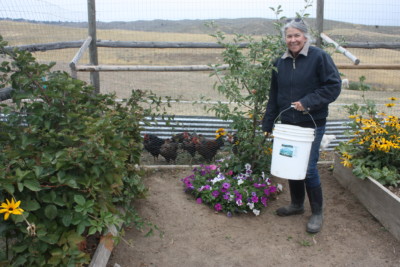
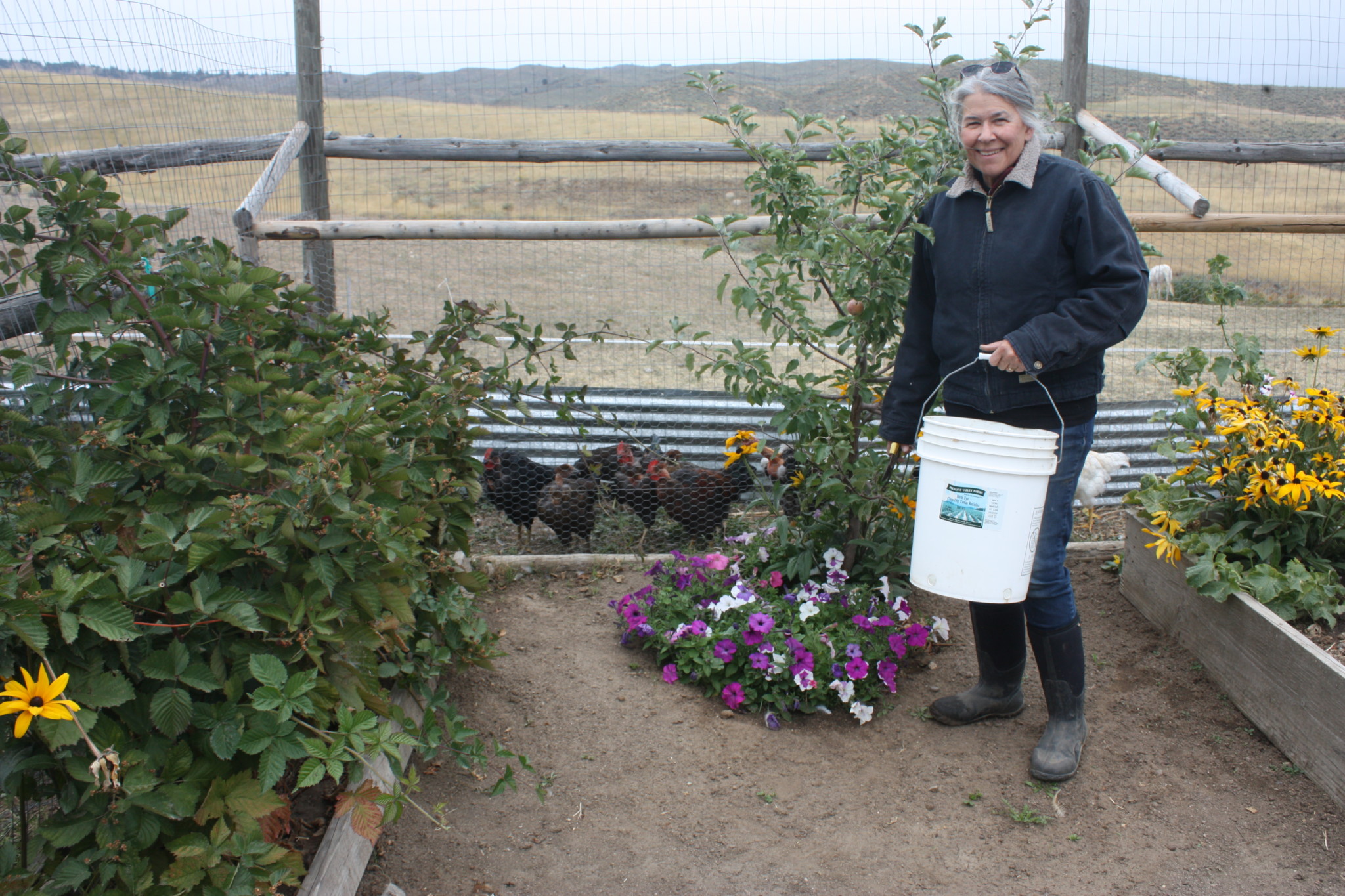
In the morning I have a routine.  It’s a routine that I’ve fallen into after years of living in the country with lots of animals to care for.  I awaken early, put on the coffee, feed the dog (who knows the routine well), put on my rubber farm boots, and head for the barnyard where I commence to open corral gates and pen doors for the morning liberation of horses, cows, chickens and ducks.  Everyone goes free after a night of purposeful captivity for the sake of protection from looming predators. It’s an outrageously  noisy time when the goose and rooster sound the alarm of liberation, ducks quake in jubilation and horses buck and snort as they gleefully run into the adjoining open pasture.  It’s sincerely a joyous time on the homestead for everyone. The chickens run for the corral where they enthusiastically pick through the previous nights treasured manure piles, the ducks dive into favored water seepages and mud wallows while the goose nibbles shoots of fresh new foliage refreshed with morning dew. Every barnyard inhabitant seems genuinely overjoyed with the freedom of another day and all present communicate the exhilaration they feel with noise and action that anyone present could not help but understand.  It’s the way, even domestic animals, are meant to exist, and because of it the products they produce for us (eggs, milk & meat) are healthier, tastier and more life giving. Everyone benefits.

America needs the revitalization of the small farm. We need to create a culture where words like “free-range”, “organic” and “sustainable” are once again not related to the trendy diets or an elite segment of people who can afford to spend extra money for what is now being referred to as “real food”, but where real food is the normal and natural way of doing things once again. There is no question, returning to a system of food production like this is a big order.  Some would call it unrealistic and even impossible in a world that is annually growing in hunger.  Yet, nothing is impossible for those who believe it is a God given responsibility to care for the hungry and poor (Matt. 25) not just with a quantity of food that fills the belly, but a quality that nourishes and restores the body.  From my vantage I see many who recognize the ultimate long range solutions to world hunger are found and implemented through the grassroots of people movements rather than through the implementation of more government subsidies and temporary handout programs (which in fact are necessary bandages in the short run).  Those in this camp might agree that the ultimate answer lies in two basic concepts: First, the old adage that compares giving a man a fish rather than teaching him how to fish (an issue of education and information – A responsibility, especially for those who accept God’s commission to care for broken humanity), and secondly, a faith in the fact that God’s M.O. is for freedom and health and that freedom is at the root of the solution.

God’s heart for liberation isn’t just for mankind but for his entire creation, yet man is always the recipient of a creation that is functioning in accordance to His plan. Romans 8 tells us that the creation suffers (even groans) when man is out of God’s will or way of doing things. In this regard some would say that much of today’s food production is motivated more by the monetary gain of a few above doing what is right for the earth and its struggling inhabitants. If a method of food production is undermining the environmental condition of the earth (water, soil, climate, etc) then it is endangering the sustainability of long term food availability. Romans  also tells us that the very welfare of the creation is directly tied to man’s sin and bad choices and in the long term everyone (especially the poor) will pay a horrible price.  “For all creation is waiting eagerly for that future day when God will reveal who his children really are. Against its will, all creation was subjected to God’s curse. But with eager hope, the creation looks forward to the day when it will join God’s children in glorious freedom from death and decay. For we know that all creation has been groaning as in the pains of childbirth right up to the present time. And we believers also groan, even though we have the Holy Spirit within us as a foretaste of future glory, for we long for our bodies to be released from sin and suffering.” (Romans 8:19-23) In the end, if we knew the truth concerning both who God really is and what His perfect will for us is (and if we were obedient to it), the world would experience the kind of freedom he has always intended.  It was Jesus himself who said, “And you will know the truth, and the truth will set you free.”(John 8:31)

Small farms aren’t the answer for a world of greater freedom, God clearly is, yet those who have experienced what I’m talking about can understand that seeing freedom played out every day, even in a simple barnyard, is a picture of how things should and could be.

Tags: , , , , ,

The "Mittleider Method" of irrigation at work

Not long ago Nancy and I were invited to teach at a Vineyard Church in Grand Junction, Colorado. It is a church very much like the Boise Vineyard in both vision and size and they also have been investing heavily in a large organic garden that volunteers maintain for the purpose of feeding the poor in their area.  Up until that time I hadn’t seen a community garden project of a scope that could compare to the one at the Vineyard Boise, but this one without question did. They weren’t producing the annual tonnage of vegetable produce as the Boise project had been, but some of their gardening techniques and systems were unique and impressive.  Two things caught my eye: one, a large aquaponic system that raised both fish and vegetables simultaneously located in a large greenhouse and second, an irrigation system that would water a 30 to 50 foot row of vegetables in a matter of minutes without wasting water.  Rick Kenagy, the man in charge of the project, told me it was called the Mittleider Method and was growing in popularity around the world. I was so taken by it I decided to incorporate it into our vegetable garden here at Timber Butte and at my request Rick gladly explained in detail how to construct and install the system.

Drilling over 4000 tiny holes took time and patience

I soon discovered that the construction of the Mittleider irrigation system was painstaking; almost so that I debated if it was worth the time I’d have to invest in setting it up. In retrospect I’m glad I bit the bullet and went for it. The most tedious part of the project was spending the time to drill literally hundreds of tiny holes down the full length of fifty foot stretches of ¾ inch PVC pipe. (In order for the system to work properly it requires drilling three small holes every four inches down the full length of the pipe.) Rick was adamant about the fact that the holes had to be drilled with a .57 drill bit which requires real care due to its very small diameter. He warned that because a .57 diameter drill bit could not be purchased at a local Home Depot and usually required special ordering, it would be wise to order a half dozen bits due to the certainty of breakage. In the end I drilled over 500 feet of pipe (4500 holes) and broke about five bits in the process. I used schedule 80 (thinner walled) PVC not only due to the cost and ease of drilling, but because it holds a greater volume of water than the thicker walled schedule 40.

To make the job easier and with less drill bit breakage I decided to make a jig using a small drill press and a ten foot piece of channel iron. I welded feet on the channel iron so that I could skew it down to a solid plank along with the drill press. I marked the channel iron every four inches so that the PVC pipe could be easily marked without the repeated use of a tape measure. (500 feet of irrigation line required drilling 50 ten foot lengths of PVC so just the marking alone was a tedious process.) Every four inches down the pipe I then drill my three holes around the bottom at about four O’clock, six O’clock and eight o’clock.  (See picture).

Watering one row takes only a matter of minutes

The other thing I did was bury a 1 inch main line from my primary water source to each row and install a ¾ inch  valve in order to better control the flow down each row. At the end of each row I put a threaded plug so that the line could periodically be flushed out.  I felt this would be necessary due to the small size of the holes. For this reason I also installed a filter in the main line that fed the entire system.

It’s important to note that the Mittleider irrigation system is not a drip system, but rather a high pressure system that quickly injects water right to the roots of your vegetables. At first look I thought it might do damage to my young plants but I found that due to its many holes the water is quickly distributed down the row before erosion occurs. We did however turn on the system before planting and made note of the small divots in the soil each jet made and then commenced to plant both seeds and seedlings between them as best we could. For more information you can look up the “Mittleider Method” on line.

Tags: , , , , , , ,

The first day of spring

March 20th marked the March equinox and the first day of spring. Here at Timber Butte it was accompanied by a harsh cold storm that covered the already thawing earth with six inches of wet snow. It was only the day before that we planted bare root fruit trees in our new small orchard, and trenched a main water line through the vegetable garden. Getting snow in late March is not unusual but it still felt a little out of place – much like the last protest from a winter season that was finally losing its grip.

Seasons always change. It’s just what happens year after year, but the weather patterns that accompany them are not always so predictable. Working with the land requires timing; I’ve discovered that what seems like nothing more than a bit of good old fashioned luck on the part of a farmer is actually a sensitivity to both the seen and unseen world. Great farmers have a gift.

For the last two years I’ve anticipated the reseeding of our west hay field which recently had become overrun with noxious weeds. About five acres of the field were so encroached with Skeleton weed that it had lost all productivity. It was even to the point that I hadn’t bothered to cut and bail it the season before. The only hope for renewing this acreage required replanting it with new seed, a process that first involved disking up the old fallow ground and harrowing it smooth enough to take seed. In order to do this the soil can’t be too wet to drive a tractor on, or too dry to effectively be broken up; especially with the small farm equipment we own. I have discovered after two years of failure it is a tricky matter which provides a very short window of opportunity. A week ago I woke up with the feeling that this window of opportunity had come. The bite of winter was still in the air and the idea of driving around all day sitting on an open tractor seat made my old bones ache just thinking about it. But, somehow I knew it would possibly be my best and perhaps only chance to get it done. In truth I wasn’t very excited about it. However, by the end of the day I felt very blessed. Nancy and I managed to hand broadcast a hundred pounds of dry-land alfalfa and grass mix over the entire pasture. And to top it off, the very next day brought a driving rain which continued for the better part of a week. It actually ended with those six inches of wet snow on the first day of spring. All this to say – our timing was perfect and a great lesson was learned.

Broadcasting seed between the storms

I am constantly reminded of Paul’s exhortation in Romans 1:20 where he tells us that man is without excuse from knowing God because he has revealed himself through his creation; his eternal power, invisible qualities and divine nature. In other words, his supernatural nature can be clearly seen in the natural world. One of the characteristics which we can clearly see is the fact that he is a God of rhythms and seasons. He loves constant change, but it is change that coordinates rhythmically and in harmony with his greater plan in the context of creation. For years a farmer’s success was dependent on his ability to be sensitive to these rhythms and seasons – even to the point of becoming a part of them. It wasn’t the farmer’s goal to alter or manipulate them, but to flow with them. This wasn’t simply a matter of predicting weather patterns, but the stewardship of soil, water, pollinating insects, and everything else that would inevitably negatively impact the long term health and productivity of the land.

This reality doesn’t end with farmers and land, but can be translated into every aspect of life. It gives us an understanding of why we as humans need to have sensitivity to the rhythms and seasons of life. It reminds us of the importance of flowing with them rather than resisting or fighting against them.

One famous quote by Solomon says that there is a season for everything under heaven; not just to plant and harvest but a time to be born and to die, a time to kill and to heal, to tear down and to rebuild, to cry and to laugh, to grieve and to dance. (Ecclesiastes 3)  For me there are two key issues revealed through this passage: one is to simply comprehend the fact that God works in all seasons of our lives so that we don’t fret so much during the harder, dry seasons. The second is that we might grasp and nurture a greater sensitivity to God’s rhythms – so we can more effectively participate and flow with his will rather than fighting against it.

Tags: , , , , ,

Home grown / homestead dinner

Have you noticed that there seems to be an awakening of social consciousness concerning not just the nutritional value but the health quality of the foods we are eating in America? It may be the media’s illumination of life threatening conditions such as diabetes, obesity, cancer and food allergies which has been inspiring a new level of deep social concern – or it may be something more. I don’t want to over spiritualize something like diet, but everywhere I look I see a plethora of common-sense, God-fearing folks changing their attitudes concerning what they put in their mouths. I’m not speaking of fad type diets for the sake of losing unwanted seasonal pounds, but rather life changing patterns and behaviors for the sake of life, and a better quality of human existence. I’ve been thinking that this new level of concern for food quality may not simply be a matter of social concern, but maybe more. Maybe it is God renewing our minds concerning a deep biblical relevance. He has done it before.

Home-cut lambchops

Much has been said about diet and food in the Old Testament. Entire books have been written about ancient Hebrew diet according to the old covenant law and how healthy it is, even in today’s world. The problem many of us have had validating Moses’ dietary laws (much of which is found in chapter 14 of the book of Deuteronomy) is that it seemed to be discredited by a passage found in Acts 10. Up to that point in scripture the gospel had not effectively spread beyond the Jewish religion. In Acts 10 Peter was asleep on the roof of Simon the Tanner’s house one afternoon when God gave him a vision. In that vision a sheet came down from heaven full of every kind of food including things not prohibited by Jewish law. Here is how the story is recorded: “Peter went up on the roof to pray. He became hungry and wanted something to eat, and while the meal was being prepared, he fell into a trance. He saw heaven opened and something like a large sheet being let down to earth by its four corners. It contained all kinds of four-footed animals, as well as reptiles and birds. Then a voice told him, “Get up, Peter. Kill and eat.” “Surely not, Lord!” Peter replied. “I have never eaten anything impure or unclean.” The voice spoke to him a second time, “Do not call anything impure that God has made clean.” [Acts 10: 9-15]

Fresh from the garden

At first look it seems as if God is changing the rules, and in a way I guess he is; but not completely. First the scripture tells us that Jesus came not to abolish the Old Testament law, but to fulfill it; and secondly, the key phrase here is, “Do not call anything impure that God has made clean”. In the context of the bigger picture of the vision, God is preparing Peter to share the gospel with the Gentiles which is an entirely new idea to Peter, but at the same time he is talking about a new concept in eating; that is “Do not call anything impure that God has made clean”. When I reread this with the concept of food in mind it dawned on me that natural God-given food, (food created by God) is good. Foods genetically altered, grown with pesticides, herbicides and fertilizers, or those unnaturally processed or filled with preservatives, are perhaps not so good.

Chickens provide organic eggs & meat

One of our motives for moving onto the Timber Butte Homestead property was to engage in a more active and healthy lifestyle. We had always been hard workers, but because we’ve never suffered from poor health or obesity we hadn’t had to give a lot of thought to the importance of diet. For the most part, eating for us was a matter of substance and taste. Having lived the country lifestyle most of our married years, much of what we ate we have either grown ourselves, shot or caught during the various hunting and fishing seasons. Much of our lives together, Nancy and I have lived off and with the land, not so much for health reasons as for economic necessity. It wasn’t until years later that we became aware that those practices are now referred to as locally and organically grown foods. And that they truly are the healthiest and most desired food sources available for those who care about their whole state of being. It has created a renewed passion to produce as much of our own food as possible over the course of a year; eating fresh produce in the summers and preserving the surplus for the remainder of the year. We do this by canning, freezing and now more recently, dehydrating.

Organic grapes harvested from the vineyard

In addition to our Timber Butte Homestead garden, vineyard and orchard production, we raise and butcher our meat as well. Besides the chickens and ducks that lay eggs and are an excellent source of protein, we are now raising enough lamb and beef to meet our personal needs as well. Not only does this homegrown meat taste incredible, but it’s also natural and organic, as we only feed our animals hay that we have grown on our own acreage. No hormones or antibiotics are ever administered to any of the feed animals under our care.

Our vision for the homestead is not farming and ranching for financial gain, but rather as a means of sustainability and health. For us, the development of the homestead lifestyle has been about physical, emotional and spiritual returns. Our prayer for Timber Butte is that it will not only provide for us a more natural and functional life, but also inspire and encourage others as they pursue a more healthy and sustainable lifestyle.

The point of our blog site here at Timber Butte is not to teach people how to do what we do. Instead, it is to document our own journey as we seek to live a more whole and fulfilling life while being good stewards of all the Lord has given us. Like so many others, we are on a fast track learning curve out of necessity and desire. The desire is to not only put the best of food available on the table, but to eat foods that make us whole and healthy as well. This is not just about what we eat, but for us it is a matter of how it’s grown as well. In all things we desire to live our lives in such a way that honors God and his creation while leaving the earth a better place than we found it.

Tags: , , , , ,

The cabin was finally closed in for the winter

Sometime during the fall I distinctly remember telling Nancy that I no longer considered the log cabin we had been building to be a construction job but rather an art project.  Although this new guest cottage was small, (it sat on a 14 by 20 foot foundation) it had taken a good deal more time and effort to build than I had originally anticipated. There had been a lot more thought and detail than anticipated, yet instead of becoming frustrated I had instead been challenged and invigorated. Working on it had sired up my creative juices.  When we had first decided to build a guest house I had envisioned a small cabin that would portray the ambiance of an early Idaho homestead. What I hadn’t considered was how much painstaking craftsmanship it would require beyond a normal conventional structure.  You may recall that we had designed the cabin after a Thomas Kinkade painting called, “A Peaceful Retreat”. (See entry #190 – March 14th – found under the Construction project category.) From the beginning we had it in mind to create more of an experience for those who would be staying in the guest cottage than simply a comfortable place to sleep. This not only required some creative thought, but quite a bit of extra work. Constructing the chimney was one good example of this.

Setting the final chimney capstone

I’m not fond of fireplace chimneys that are veneered with artificial cultured stone; from my perspective they look too perfect for the homestead appearance we have endeavored to achieve here at Timber Butte. For this cabin especially we wanted the chimney to look as if it were a hundred years old and built by a non-professional. (Not too hard to achieve when you’re a non-professional.) Because of this it had taken me a good deal of time just to collect enough squared off pieces of granite to stack the required twenty foot high column. Because of the weight of the rock and mortar I was only able to build a couple of feet of chimney a day in order to allow adequate drying time between sets. As a result it took me more than a month to build it to its full height. It was tedious painstaking work that required dozens of trips up and down an extension ladder carrying rocks of every size and bucket after bucket of wet mortar.  Putting on the final cap stone gave me a really wonderful feeling of satisfaction.

Eric chinking a corner log

Chinking between the logs was another all consuming project.  I didn’t know if I had either the patience or the skill that would be required to chink the cabin’s walls both inside and out. This job was not only necessary to keep the cold winter drafts for seeping in, but also to keep the mice, bugs and wasps from making homes within the many open cracks. It was a smart decision when Nancy suggested we hire our friend Eric McCray to take the project on. Eric was by profession a tile setter. He is a detail guy and a perfectionist and although he had never chinked a cabin before we knew he would undoubtedly be the right guy for the job.  Eric is the overseer of our Bible school at Boise Vineyard and because he and his wife Melissa raise their own financial support for ministry he accepted the offer. Watching Eric work was, again more like watching an artist than a construction laborer.

Homemade windows

Figuring out what to do about windows was yet another dilemma. We felt that commercially vinyl or metal windows would look totally wrong for the feel we were looking for. We also knew that contemporary small-paned wooden framed windows were out of our price range. Finding windows that had the homemade vintage style we had envisioned were nowhere to be found. We desired windows that would not only look like they belonged in a heritage log cabin but were energy efficient as well; double pained and tight fitting. In the end we decided that our only option was to construct them ourselves. This I did, first building the wooden frames and grids and then custom ordering the double pained insulated glass inserts that would be set into them.  Again, this project required many labor intensive hours of meticulous woodworking, yet in the end we installed the ten windows needed for the price of one high-end store bought wood-framed window.  Not only did our handmade windows give the little cabin the right look and feel, but having built them gave us a great satisfaction that could have only come though exercising creative imagination rather than a commercial purchase.

We are still a long way from being finished with our project, but because we are holding the perception that what we are doing is art rather than simply a building project has allowed us to enjoy the process.

Tags: , , , ,

The young ducks were basking in their freedom

If you are a faithful follower on the Timber Butte Homestead blog site you may recall reading about how Nancy commissioned me last spring to construct a floating duck house. (See entry #193 – April 18th 2011 – found under poultry) She decided to release three of her most precious Rouen ducks (Hazy, Lazy & Daisy) on the pond at the bottom of our property.  Again, as you may recollect in an earlier entry, she had raised these particular little ducklings in our bathtub the year before. (See entry #164 – May 1st 2010 – “Meet Daisy, Lazy & Hazy or is Nancy just a little crazy”.) All this to say, these were not just any normal barnyard critters; these little ducklings had experienced some special rearing by the grandmother of all ducks. Anyway, the minute the door opened on their new house, out into the open world they fled, into the wild in a state of terror. It was as if Nancy was hiding in a duck blind blazing away after them with a 12 gauge shotgun; which of course she wasn’t. Of the three (a drake and two hens), one hen was never to be seen again. I reckon she became some coyote’s dinner that very first night.  The remaining two did however manage to survive the ordeal and soon were happily swimming on the pond together, at least for awhile.  After a few weeks, to our dismay, the second hen disappeared as well. At that point the poor lonely drake sat by himself among the overhanging willow trees at the edge of the pond day in and day out. He looked lonesome and forlorn but clearly had no intention of being recaptured and returned to captivity. Nancy faithfully left deposits of cracked corn on the porch of his floating duck house, which although he pretended to ignore anytime we were around, he managed to consume day by day.  This went on for weeks until to Nancy’s elation the missing little hen finally showed up one evening swimming across the pond followed by ten fluffy baby ducklings. It was a great day of celebration on the homestead.

Throughout the remainder of that spring and summer the small little family grew to maturity until it became difficult to discern between the parents and babies. Two of the babies had been lost by an overzealous Lily (our little golden lab) who had somehow gotten in touch with her forgotten bird dog DNA. I might add that Lily was quickly and somewhat severely reminded that ducks were off limits no matter who she thought she was. After that brief unfortunate incident (for both Lily and the ducks) everything remained tranquil on the pond until the first freeze in October. That’s when the coyotes realized that the remaining ducks were somewhat easy pickings now that it was possible for a full grown carnivorous animal to walk on water. Two more of the family were lost within days. In a state of desperation I was once again commissioned to construct a large duck contraption. This time a duck trap.

In late October the trap was set and baited with a tempting pile of cracked corn and the following video was captured on a cell phone of a friend, Eric Mc Cray, who happened to be present on that famous day of Nancy’s great duck rescue. Just a note before you watch this – it was very difficult to get all the ducks in the cage at the same time and when the last small hen did eventually enter I prematurely sprung the trap. Nancy’s reaction was a result of the fact that the heavy door fell on the little hen’s neck as she attempted to escape. I was certain that she (the duck) would become that night’s dinner but was surprised to discover that Nancy managed to release her unscathed by the traumatic ordeal. In all honesty I was actually more concerned about Nancy running down the snowy bank helter-skelter than the welfare of the duck. All ended well as you will see.


[Please note: no ducks or wives where harmed in the filming of this video]

Tags: , , , ,

21
Nov

A significant first harvest – Entry 203

   Posted by: trobinson   in Agriculture, Vineyard

Our first small harvest

Every homestead requires some sort of a cash crop. Considering this Nancy and I spent a considerable amount of time investigating various enterprises that might be a good fit for us here at Timber Butte.  In the end we landed on the idea of establishing a small test vineyard on some rock terraces I had built  next to the root cellar behind the house. We learned that Timber Butte sat at a pretty high elevation (4000 feet) for a productive vineyard, but we also knew that we had other characteristics which were highly favorable for such a venture.  We had ample south facing slopes that received long uninterrupted days of sunlight, adequate soil conditions, and a consistent flow of air.  We also knew that although the summer months were long and warm, the winter months experienced temperatures that plummeted below zero for sometimes weeks at a time.  Not knowing for sure how grapes would do under these extreme conditions we decided to put in a small test vineyard of fifty cabernet franc vines  and observe their vitality over the course of a couple of seasons rather than put too much on the line right away. (Cabernet franc is a variety that does well in colder climates).  After planting those first fifty vines in the spring of 2010 we put in a second fifty the following spring with the help of our kids.  Things went better than expected and although we weren’t looking to be able to pick grapes for at least three years we ended up with a small but encouraging harvest several weeks ago only days before our first fall freeze.

Planting our first vine in 2010

We knew little about grapes or vineyards but the learning curve became both energizing, fascinating and fun. Over the past few years our vacation times have been invested in visiting vineyards throughout California, Washington, Oregon and southern Idaho. We’ve read books, studied online and made inquires of anyone we could find with knowledge and experience.  Through all of our efforts we’ve learned valuable skills concerning such things as pruning techniques, watering systems and trellising.

In addition to learning the elementary skills of a vintner our investigation has illuminated to us why the Bible so prolifically uses the metaphors of vineyards, grapes and wine as an allegorical picture of mankind’s relationship with God. Jesus teaching in John 15 may be one of greatest examples of this where he said, “I am the true vine, and my Father is the vine dresser. Every branch in me that does not bear fruit he takes away, and every branch that does bear fruit he prunes, that it may bear more fruit. Already you are clean because of the word that I have spoken to you. Abide in me, and I in you. As the branch cannot bear fruit by itself, unless it abides in the vine, neither can you, unless you abide in me.”

Planting the second fifty vines in 2011

Working in our first small vineyard has taught us many parallel truths between the life of a grape and our own. Some of these simple truths help me understand why God allows me to live in the tension of blessing and struggle. It’s a known fact that grapevines do best when they are forced to struggle.  Fertilization which other plants demand will actually set back the growth of a vine; grapes do best in rocky and arid soils. In the same way too much water in the later days of summer will cause the vine to die back after the first hard freeze of winter. In my desire to pamper my vines I’ve had to force myself not to irrigate my thirsty plants during the hot dry months of August and

Plowing hillside terraces

September. Radical pruning is another necessity for the vine if it is to produce an abundant functional harvest.  Grapes require a strong breeze for pollination and long days of sunlight for the fruit to fully ripen.  In a vineyard, everywhere you look there are powerful analogies of the human struggle for spiritual maturity. For reasons like these I feel God’s presence as I labor in my vineyard both working the soil and tending the vines. I find it a good place to be at this time of my life after laboring some thirty years as a pastor in the church we have so lovingly called the” Vineyard Christian Fellowship”.  Although our first harvest was very small it was an encouraging sign of God’s ultimate intention for the future of his Vineyard.

Tags: , , , , , , , ,

Introducing Buddy / Bandit

We weren’t looking for a new horse until we heard Tiara, a friend from church speak of her need to find a loving home for a big black gelding named Bandit. She told us about a long time friend of hers named Kernea who had raised and trained Bandit from a colt but due to the changing circumstances of her life as a busy wife and mother had reluctantly decided to find a new home for the horse she had lovingly cared for since her teens. Bandit is a beautiful black twelve year old, sixteen hand Canadian gelding with a long flowing main and tail.  He is beautiful on the outside but more importantly, sweet-spirited on the inside.

A year before, Nancy and I had lost a Buckskin gelding named Dusty (see entry #109- under Livestock category ) to a fatal foot injury and still missed his gentle personality.  It only took a minute to discover that Bandit possessed this same gentle attitude even though Kernea hadn’t been able to work him for quite some time due to pregnancy’s and the full time job of raising two energetic boys.

When Bandit arrived at Timber Butte everything was new for him, especially the freedom of open spaces and the introduction of three curious mares. It didn’t take long however for him to put everyone in their place and move to the top of the pecking order which he somehow managed to do without so much as a single bite or kick.  Riding him was another matter.

Because of his long sabbatical from the saddle and bridle, Bandit was afraid of every new thing. He shied at nearly everything and needed to be reminded once again how to respond to reign and leg controls. He was especially terrified of four-wheeler’s and other noisy machines. (Frankly, I didn’t hold this against him since I share the same irritation.) To remedy this problem I decided to take him on a long fifty mile ride from Timber Butte to High Valley and back. I was amazed to discover that although the ride took us over a high pass and the days were warm he barely broke a sweat.  It was on that ride that we became good friends and I lengthened his name to Buddy / Bandit.  For us he will always be known as Bandit because Nancy said that like a bandit he had stolen our hearts.

Tags: , , , ,

Nancy's faithful side-kick Lily

This year’s garden at Timber Butte has been maybe the best in Robinson horticulture history.  The raised beds were a great addition, but having a year of minimal grasshopper infestation and a wonderfully abnormal mild spring and summer had a lot to do with its outcome as well.

After the initial work of building cedar raised beds, preparing soil and setting up the watering systems I turned the day in and day out gardening work over to Nancy and her faithful side-kick Lily. She devoted most mornings and evenings to planting, weeding and watering which provided bountiful produce for the kitchen table most every night.  As the days have grown noticeably shorter Nancy is again busy in her kitchen freezing, canning and storing the fruits of her labor in preparation for the onslaught of yet another winter; one which is already showing signs of inevitable approach.

Tags: , , , ,

Mr. Mudd pours the foundation

Last March I wrote an entry in the Timber Butte journal I called “Moving vision from a dream to reality” (See Building projects under categories). I shared how we had finally gotten started on the log guest cottage we had dreamed of building when we had first started developing the homestead here at the base of Timber Butte.  This entry is a progress report on a project that is now well underway.

When the ground finally thawed out enough to set forms we called in a friend of ours who attends the Vineyard Christian Fellowship, Brian Wheeler or otherwise known as “Mr. Mud”. Brian’s crew amazingly formed and poured the foundation in one day.

Triumph Log Homes crew preassembled the cabin

After submitting our rough plans to Triumph Log Homes, a newly established family owned log cabin kit business in the nearby community of Horseshoe Bend our new little cabin began to really take shape. As the logs were milled inside the old Boise Cascade warehouse they were meticulously preassembled on the spot.  Because our little cabin was the first to be built by this new company extra care was taken to work out the bugs. It was a joy to be a part of that process and watch the small crew lovingly figure everything out. In the end we developed not just a working relationship with the folks at Triumph Log Homes but real friendships.

Sub- floor being layed

Our good friends Josh and Melissa Fishburne volunteered to help me set the floor joists and lay the sub-floor after the foundation forms where stripped. For the first time we could grasp a sense of the small cabins actual size and shape.

The first logs being set in place

After the guys delivered the log bundles I knew that I needed help not only figuring out how they would go together, but lifting and setting them onto the walls.  For this I called on the faithful ROMEO’s, otherwise known as “Retired old men eating out” to lend another helping hand.  As I have mentioned before in previous entries they have been a huge blessing to Nancy and I on many occasions.  On this new project however they went the extra mile spending two long days lifting and assembling the exterior walls. This phase require extreme accurate measuring, drilling, pegging and driving several hundred 10 inch timber skews. When the walls were finished they ended up being within a quarter of an inch of perfection from top to bottom.

The main beam & rafters were lifted and set

About a week later yet another group of friends and family came up to finish erecting the log gabble ends, lift the main beam into place and cut and fit the rafters. The main beam was a twenty-four foot 6X12 that weighed hundreds of pounds. For weeks I had been thinking about how we might manage to lift it to its 16 foot high perch without a crane.  In the end it happened by sheer brute force. I was more than thankful for the young backs that did it.  This is as far as we have gotten on the project so far, but I feel a sense of relief and satisfaction knowing that most of the major lifting is over.


Tags: , , , , ,

The new raised beds in action

I wasn’t too sure at first, but now I’m a believer. Raised beds are worth the investment of both money and the initial effort it takes to set them up. It is only June here at Timber Butte and after a very late and frigid spring planting I wondered if we would ever get anything to grow. We had decided to build raised beds clear back in March (See entry #191 – April 5th 2011 – Under agriculture category) but waited to plant even the early stuff until late in May due to unexpected snows and constant driving rains. It has been an unusual spring everywhere. Farmers fought every kind of weather and natural disaster from extreme drought to record breaking floods which has and will continue to result in escalating food prices. This of course makes planting a  backyard vegetable garden a really good idea.  All this to say, raised beds are a good way to go. Here are six good reasons why:

The old traditional beds took a lot more work

1. Soil control – Raised beds hold their soil from season to season while traditional mounded rows have a tendency to erode or flatten out and redistribute their soil during the winter months. Raised beds retain the rich compost we build into them season after season along with earth worms and other organisms that are essential to make stuff grow.

2. Weed control – I love raised beds because they require much less maintenance.  We lay gunnysacks in the pathways between the beds which not only make the garden look tidy but serve as effective weed barriers. Because the beds are raised they require less bending when weeding is required.

3. Water control – Normal mounded beds have a tendency to round off as the growing season commences and water naturally runs off into the low spots taking top soil with it. Raised beds hold their shape causing water to stay where it belongs around the plants. This alone is an advantage worthy of the effort.

4. Organization – For some reason raised beds are easier to organize. Walkways are more defined and, in our case, we have placed cross bracing every eight feet which also defines growing spaces.  These spaces are numbered and labeled which also helps organize irrigation drip lines so that we can more easily keep track of what’s been watered and for how long.

5. Annual spring preparation – I love raised beds because they drastically reduce the work I have to do every spring rebuilding all of our beds. Because they retain soil and nutrients the amount of dirt I have to move is minimal. It also decreases the effort it takes to reset drip lines.

6. Higher yield in smaller spaces – The greatest advantage is the fact that vegetables grow better in fertile raised beds and thus provide higher yields.  As I compare the present progress in both quantity and quality of vegetation compared to the same time in previous years I am amazed at how much better things seem to be doing now that we have transitioned into raised beds.

Tags: , , ,

22
Jun

Junk pile seeder – Entry #198

   Posted by: trobinson   in Agriculture, Food production

Poking holes in a raised bed

A couple of years ago Nancy and I grew several rows of Mammoth Sunflowers; the ones with huge heads that produce an abundance of large seeds. I had read that in earlier homesteading times people had used the seeds to supplement their chicken feed during the winter months. We had hung the large heads upside down in a barn stall to dry and soon discovered that one large head could provide a day’s feed for a half dozen chickens or so if necessary. (See – Sunflowers – More than a pretty face – entry #112 – August 20, 2009.) After that experience I had always contemplated planting a larger plot and take the experiment a step further. We did that this year.

I plowed up a fertile spot that was about 100 by 100 feet and pulled it with the tractor into rows in preparation for planting. Sunflower seeds are generally planted about six inches apart and an inch deep which meant poking a lot of one inch holes while crawling on hands and knees.  Years ago I had sold a seeder in a garage-sale that would have been perfect for the job, but like they say hindsight is always better.  The point being, I didn’t have the tool for the job and I wasn’t

Adjustable bolts control depth of seed holes

looking forward to the alternative. As a result I decided to manufacture my own seeder out of whatever I could find lying around the place. The result wasn’t bad and after having accomplished the job I thought it might be an idea worthy of sharing. Here’s what I did.

First, I found a flat piece of steel four inches wide by 40 inches long and drilled four holes six inches apart that were large enough in diameter to take a half inch bolt. I then found four half inch bolts and double nutted each of them (placing a nut on each side of the steel plate) so that I could adjust how far they stuck through the bottom of the plate. (See picture) I then welded the steel plate to a stick of steel rebar along with a couple of braces to form a handle (Again, see the picture.) The bolts were used to poke the seed holes; four at a time, six inches apart while the adjustable bolts controlled their depth.  I later discovered that the flat edge could be used as a grader blade to prepare the row or a raised bed for planting. The tool may be crude, but it did the job quickly and saved my back in the process.

Tags: , , , ,

Clipping off the lower branches

Until I learned to plant tomato starts Mr. Bill style our vines rarely grew more than four feet high before the end of the growing season. Bill Meeker is the overseer of our community garden at the Vineyard Church in Boise and a master of vegetable gardening. The following is what he taught us.

For those who have grown vegetables for any length of time what I’m about to share will most likely not be a novel idea. But to some it will be an amazingly simple process to enhance your garden’s production. The key to Mr. Bill’s technique is to not place the tomato plant’s root ball in a fertile hole as you would with other pre-grown potted plants. Instead you lay it horizontally in a longer shallow trench after first clipping off the lower branches. You bend only the top third of the plant into an exposed upright position. By trimming off the lower branches and baring the bottom two-thirds of the main stem underground, it encourages additional root production. Everywhere a branch has been cut off new roots will develop. This will provide additional moisture and nutrients to be absorbed which will stimulate plant growth.         So here is the process:

  1. Lay horizontally in a shallow trench

    Begin with a healthy plant that is twelve to twenty inches in height.

  2. Trim off the bottom half to two-thirds of the live branches leaving a long bare stem below a small clump of healthy foliage.
  3. Dig a shallow trench in fertile soil just long enough to lay the root ball and bare stem horizontally in the ground.
  4. Lay the vine in the trench, gently lifting the leafed top of the vine into an upright position. Then, cover and water the roots and pruned vine stem.

Fiinished product

The first time I used Bill’s technique it felt a little disheartening to bury the majority of a beautiful large plant. In the end our vines have produced bumper crops and have grown to heights of five to six feet. I guess it’s like many things in life; the visible fruit of our lives is dependent on both the pruning and what goes on below the surface.

Tags: , , , , , ,

29
May

Tomato frames built to last – Entry #196

   Posted by: trobinson   in Agriculture

Panel cages support 5 to 6 foot tomato plants

After Mr. Bill our master gardener at the Vineyard showed us how to properly plant tomato starts our plants consistently grow five to six feet in height.  (I’ll write a future blog on what he showed us).  The problem with such big plants, especially after they become loaded with heavy tomatoes, is the inadequacy of round commercial wire frames.  Not only did I find myself driving in support posts every year as our plants grew heavier and taller to keep them from falling over (especially on windy days) but they were expensive.  At first I constructed wooden frames like I’d seen in so many other vegetable gardens, but they were always falling into disrepair and in need of rebuilding year after year.  That’s when we decided to build cages that would last forever out of steal farm panels.

A farm panel is a 16’ X 54” mesh panel made of heavy gage wire.  They can be purchased at most any farm supply store because they are most commonly used for animal pens or corrals. We discovered that they work perfectly as lifelong, indestructible tomato frames and trellises for beans, peas, cucumbers and other climbing vegetables. Although the panels are manufactured out of heavy gage wire they can easily be cut with the use of bolt cutter, hacksaws or an oxy-acetylene cutting torch.  I personally purchased a pair of small bolt cutters for this very purpose not only for their use in the vegetable garden, but because we use them for all kinds of other purposes around our homestead.

Knowing that the panels came in sixteen foot lengths we planted our young tomatoes in sixteen foot by two foot rows. I cut several of the panels into two foot sections to support the ends and middle of each row.  This made perfect sixteen by two foot sturdy cages that stood fifty-four inches in height.  Realizing we would be reassembling the frames year after year I heated and bent the horizontal wires of the two foot sections into vertical 90 degree hooks or tabs so that they could be interlocked at the corners with the sixteen foot lengths.

This will be our second year using the new cages. They worked perfectly last year even in our high winds and it will be a pleasure setting them up again this spring especially after we designed the new raised beds to match their dimensions.

Tags: , , , , ,

Tasty or Yummy ... I can't remember who's who.

The growing community of farmyard friends both domestic and wild continues to develop here at Timber Butte Homestead.  As May heads towards June and the vegetable garden is showing signs of new growth as it enters the fourth season of productivity. Even the barnyard critters have increased in variety and population.  Not only that, but as the shade trees we first planted have started to mature they too have attracted nesting birds of all kinds who now call Timber Butte their summer home.

The two new lambs are terrorizing the horses & mule

The mornings are filled with the songs of Meadowlarks, Robins and Mourning Doves and the evening skies are alive with the acrobatic movements of Barn Swallows, Humming birds and birds of prey.  Even the majestic Bald Eagle that frequented our hills last year has again returned to thin down the prolific ground squirrel population.
Added to the barn yard community are two new yearling Angus steers named “#24” and “#25” also known as Yummy and Tasty.  As I mentioned before, Nancy has increased the ranch feed bill with her rapidly growing flock of ducks who always seem famished. In addition to that we acquired two new little lambs, yet to be named who have held Lily our little Golden
The new ducklings always seem famished
labs attention day and night.  Even the horses have been mesmerized by their recent arrival to the point of ignoring their evening bucket of grain.  The silence that once characterized the solitude at Timber Butte has now been broken with the harmonies of bleating sheep, mooing cows, clucking chickens, quacking ducks, snorting horses and a lone braying mule.

Tags: , , , ,